Intro
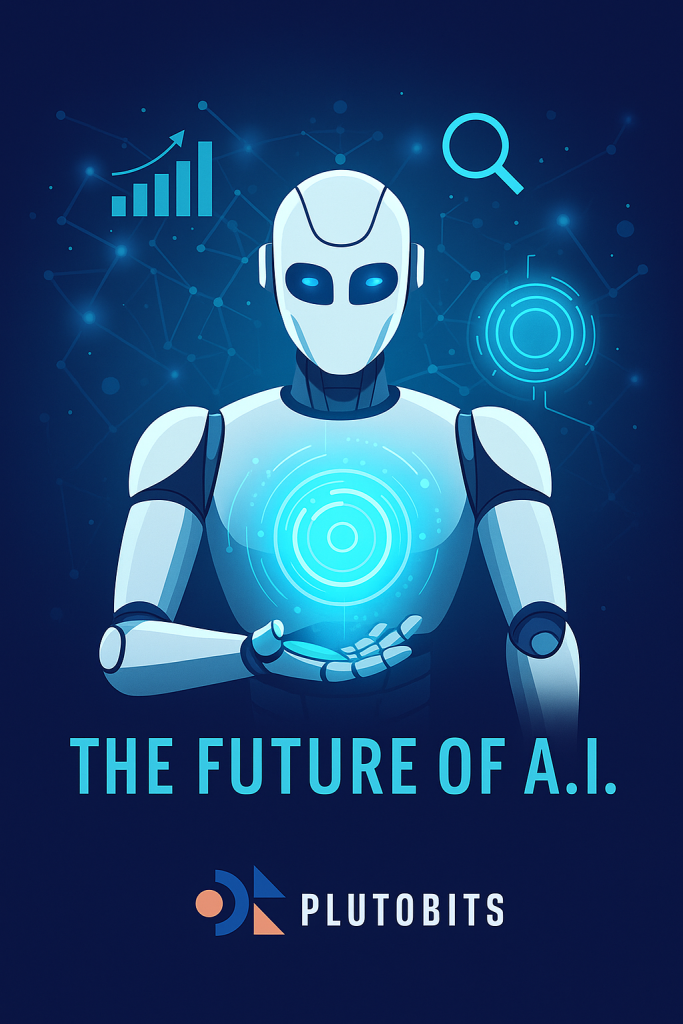
The pace of technological change has never been faster. In 2025, businesses that succeed will be those that combine intelligent automation, secure distributed systems, scalable cloud infrastructure, and ultra-fast connectivity. The hero image above a futuristic humanoid robot holding a glowing holographic interface captures the spirit of this transformation: human-centric technology working behind the scenes to help organizations scale, secure, and innovate.
In this post we’ll explore the major trends shaping 2025, explain why they matter, and give practical steps you can take to prepare your business today.
1. Artificial Intelligence: From Assistant to Co-pilot
AI is moving from narrow automation to business co-piloting. Instead of just performing repetitive tasks, AI systems are increasingly used for decision-support: generating content, predicting churn, automating customer routing, optimizing supply chains, and extracting insights from complex data.
What to do now
- Start small: pilot AI for one high-value use case (e.g., customer support automation or sales lead scoring).
- Prepare data: collect, clean, and label the data that will feed AI models. Good AI depends on good data.
- Think human + AI: design UI/UX that lets humans supervise and override AI outputs.
- Measure & iterate: track business KPIs (time saved, conversion lift, error reduction) and refine models.
2. Blockchain for Business: Trust Without a Middleman
Beyond cryptocurrency, blockchain’s value lies in verifiable, tamper-evident records and decentralized workflows. Industries such as supply chain, finance, and identity management use blockchains to improve traceability and reduce reconciliation overhead.
Realistic use cases
- Track provenance for physical goods (food, pharmaceuticals).
- Create auditable logs for regulatory compliance.
- Tokenize rights or digital assets for easier transfer.
Implementation tip: Identify a cross-organizational process where multiple parties lack a single trusted record (e.g., supplier certifications) those are prime candidates for a blockchain pilot.
3. Hybrid & Multi-Cloud: Flexibility Is a Must
Cloud architectures are maturing into hybrid and multi-cloud deployments. This lets businesses avoid vendor lock-in, optimize costs by using the best cloud for each workload, and improve resilience.
Checklist for adoption
- Inventory your apps and data put latency-sensitive workloads closer to users.
- Adopt cloud-native patterns where beneficial (containers, microservices).
- Establish governance for cost management and security across clouds.
4. Cybersecurity: Zero Trust & AI-Assisted Defense
As systems become distributed and data sprawl grows, perimeter-based security is not enough. Zero Trust architecture (verify every access request) and AI-assisted threat detection are becoming standard.
Actionable steps
- Implement multi-factor authentication and least privilege access.
- Deploy logging and central SIEM/analytics for threat hunting.
- Run regular tabletop exercises and vulnerability scans.
5. 5G + IoT: Real-Time Data at Scale
5G expands bandwidth and reduces latency, unlocking real-time IoT use-cases industrial automation, connected vehicles, smart cities, and real-time health monitoring.
How to prepare
- Design edge-capable systems for low-latency processing.
- Secure devices with lifecycle management (firmware updates, identity).
- Plan for data volume use streaming ingestion and real-time analytics.